 ESG
ESG  Broker Friendly
  ES
ES EN
EN
Industry 5.0: The New Industrial Revolution Driven by Human Collaboration
In a world where manufacturing, logistics, and technology are increasingly interconnected, a new industrial phase is emerging: Industry 5.0. It is not solely about automation or digitalization, as Industry 4.0 was, but about rethinking how humans, machines, data, sustainability, and resilience work together to create smarter value chains that are people-centered and future-oriented.
This is a strategic shift. For companies, it represents an opportunity to innovate, differentiate themselves, scale with agility, and build operations with purpose.
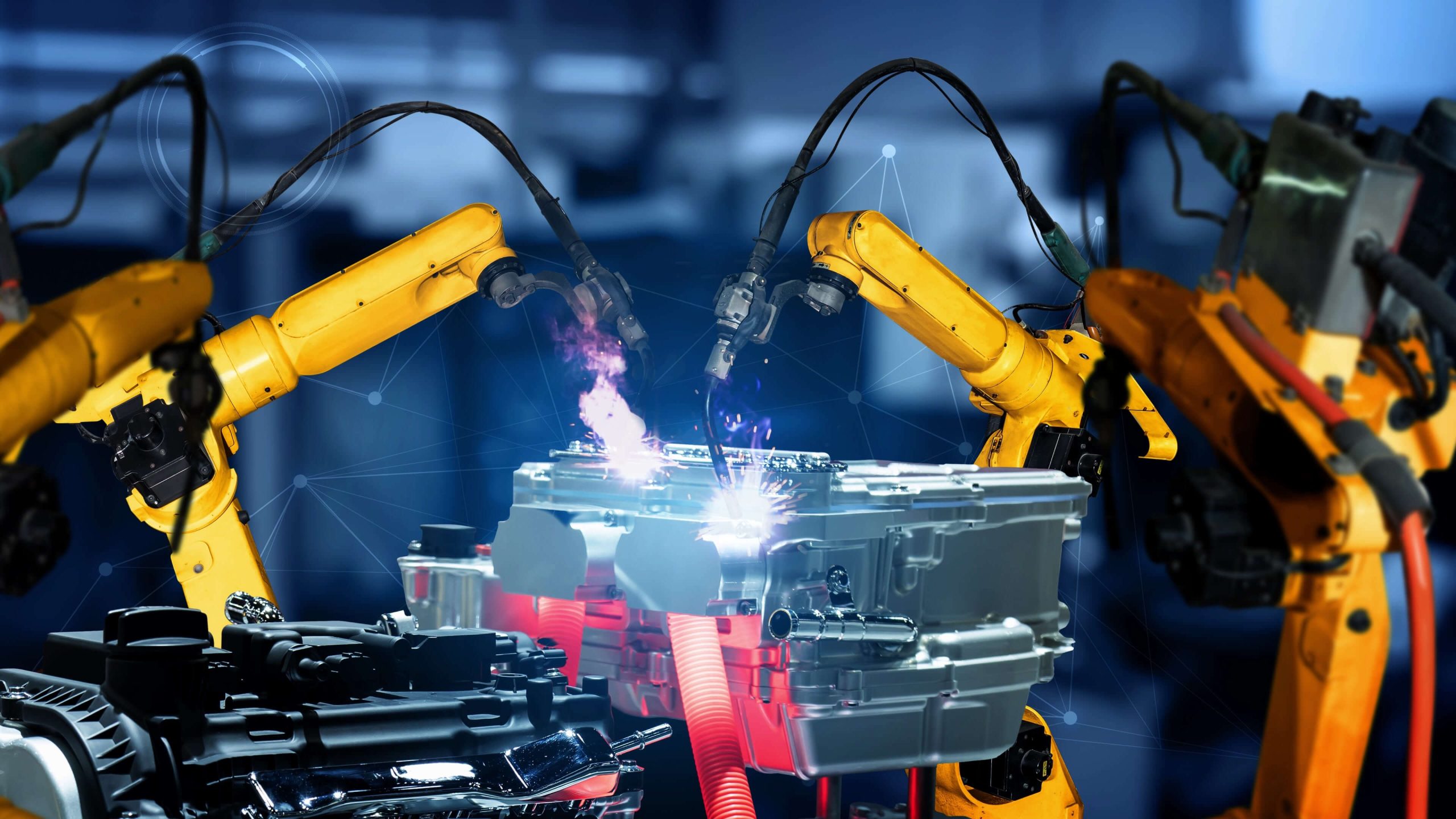
What is Industry 5.0? Definition and key concept
Industry 5.0 marks a new phase in industrial evolution, characterized by collaboration between humans and advanced technologies such as artificial intelligence, robotics, the Internet of Things (IoT), big data, and machine learning. Unlike Industry 4.0, which focused primarily on automation, digitalization, and efficiency, Industry 5.0 pursues a more human, sustainable, and resilient approach, where technology becomes an ally for improving people’s quality of life and well-being.
This new stage goes beyond production and productivity, proposing a vision in which industry actively contributes to social and environmental progress. It places the worker at the center of the process, leveraging automation to free up time and allow people to focus on creative, design, and innovation tasks. In this way, higher-value jobs are created and deeper personalization is offered in products and services.
Industry 5.0 also entails a paradigm shift: it moves beyond the exclusive pursuit of economic value and adopts a broader vision based on social value, well-being, and sustainability. This approach drives companies to be more agile, flexible, and responsible, fostering production models that not only reduce negative impacts but also generate tangible benefits for society and the planet.
Industry 5.0 is described as the next phase of industrial evolution, where already-dominant technology is combined with a more human-centered approach. Its structure rests on three strategic pillars: human-centricity, resilience, and sustainability.
1. Human-centric: Industry 5.0 positions the worker as the main axis of the production process — not as a mere operator of technology, but as its strategic collaborator. It asks what technology can do for people, rather than the other way around. By combining the precision and speed of automated systems with human creativity, intuition, and capacity for innovation, it fosters a more inclusive, meaningful, and productive work environment. This synergy drives the personalization of products and services, improved workplace well-being, and greater professional satisfaction.
2. Resilience: Industrial resilience refers to the capacity to adapt and respond to crises or disruptions, such as those experienced during the pandemic. Industry 5.0 promotes more agile, flexible, and robust infrastructure and supply chains, capable of maintaining operational continuity in adverse scenarios. The intelligent integration of technologies such as the Internet of Things (IoT), data analytics, digital twins, and cybersecurity makes it possible to anticipate risks, optimize decisions, and strengthen the stability of the industrial ecosystem, ensuring sustainable long-term development.
3. Sustainability: The sustainability pillar drives companies to produce with environmental and social responsibility, adopting principles of circular economy and energy efficiency. This includes reducing the consumption of natural resources, minimizing emissions and waste, and implementing cleaner, more efficient processes. Beyond mitigating negative impacts, Industry 5.0 seeks to ensure that industrial activity generates positive value for society and the planet, promoting models that balance economic growth, human well-being, and respect for ecological limits.
Differences between Industry 4.0 and 5.0
From an automation-centered to a human-centered approach
Industry 4.0: The rise of intelligent automation
Industry 4.0 marked the beginning of an era dominated by automation and advanced robotics, where both large corporations and small and medium-sized enterprises integrate intelligent machines and collaborative robots (cobots) to optimize production. These technologies handle repetitive, dangerous, or low-value tasks, improving efficiency, safety, and product quality.
Automated systems, connected through the Internet of Things (IoT), generate enormous volumes of data that are analyzed with artificial intelligence to optimize processes, reduce costs, and accelerate decision-making. This digital connectivity has enabled the rise of “mass customization,” in which consumers gain access to a wider variety of customized products without increasing production costs.
However, the expansion of automation has also transformed the labor market: many human tasks have been replaced by robots, and workers must adapt to increasingly technological and demanding environments. In this context, Industry 4.0 consolidated the reign of intelligent machines, where efficiency and productivity are the central axes of the industrial model.
Industry 5.0, by contrast, asserts that this automation should serve people, recognizing that human creativity, adaptability, and judgment are irreplaceable. In the words of EU Research & Innovation, its core pillars are ‘the joy of work, worker well-being, and sustainability.’
We can see it this way:
- 4.0 = machines + data + automation
- 5.0 = people + machines + data + purpose
Industry 5.0 enabling technologies
While Industry 4.0 established the foundations (IoT, big data, autonomous robots, horizontal/vertical integration, digital twins), Industry 5.0 extends them with new layers:
- Cobots (collaborative robots) that work alongside humans instead of replacing them.
- Explainable AI, edge computing, and human-plus-machine decision-making systems.
- Digital twins, simulations, and immersive learning environments (XR) for operators.
- Advanced connectivity (5G/6G), sensors, and highly flexible industrial networks.
- Business models focused on circularity, resource efficiency, and regenerative design.
Taken together, Industry 5.0 does not replace Industry 4.0 but complements it, steering digital transformation toward a more humanized, ethical, and sustainable model.
Advantages of Industry 5.0 for the manufacturing sector
Mass customization and intelligent efficiency
Thanks to human-machine collaboration, companies can combine the speed and repeatability of machines with human creativity to deliver customized products. For example, cobots on production lines free workers from routine tasks, allowing them to focus on innovation or quality control.
This generates concrete benefits: greater agility, shorter time to market, better demand matching, and higher customer satisfaction. One study finds that the transition to Industry 5.0 significantly improves product traceability and customer satisfaction.
Talent attraction and retention
In an increasingly competitive labor market, attracting and retaining qualified talent is a constant challenge. Industry 5.0 transforms the work environment by giving employees a more creative and strategic role, rather than limiting them to operational tasks. This approach generates greater engagement, satisfaction, and a sense of purpose — factors that drive talent loyalty and a more innovative workplace culture.
Sustainable and responsible production
Industry 5.0 integrates sustainability as part of the operation’s design: lower energy consumption, less waste, circular economy, and cleaner chains. For example, the EU recognizes the need for industry not only to create jobs, but also to protect workers and the environment. These capabilities have direct implications: improved corporate reputation, regulatory compliance, potential access to green incentives, and greater resilience to disruptions. This is also expected to support talent retention, as workers increasingly value environments with purpose.
Industry 5.0 in Mexico: opportunities for industrial parks
Mexico is in a strategic position to adopt many of the advantages of Industry 5.0. Some key factors include:
- A favorable geographic location for nearshoring and connections with the United States.
- A growing manufacturing talent pool and mature supplier ecosystems.
- Established industrial corridors (the Bajío, the Northeast, etc.).
In this context, industrial parks play a central role: they must offer infrastructure that supports not only Industry 4.0 (automation, IoT), but also the human-machine collaboration, sustainability, flexibility, and resilience characteristic of Industry 5.0.
For example, a park equipped with high-density fiber optics, backup power, modular spaces, industrial coworking areas, recycling systems, and more will be better suited to the new era.
The adoption of Industry 5.0 technologies in Mexico is still emerging, which creates an ideal moment for companies that want to differentiate themselves, capture talent, and establish future-ready operations ahead of their competitors.
VYNMSA and the infrastructure for the new industrial era
Industrial developers like VYNMSA play a key enabling role in the transition to Industry 5.0:
- More than 30 years of experience and multiple industrial parks provide a trusted foundation for companies looking to establish or expand their operations.
- Build-to-suit spaces and ready-to-occupy industrial warehouses reduce installation, setup, and adaptation times for human-machine collaborative environments.
- Strategic locations in the Bajío and the Northeast already offer the connectivity, logistics, and industrial environment needed to adopt advanced technologies.
- With infrastructure services such as high-voltage power, gas, data, security, loading docks, and modular spaces, integrating Industry 5.0 systems — sensors, cobots, innovation spaces, and more — becomes far simpler.
- Ultimately, a ready-equipped industrial facility allows companies to focus on transforming their operations rather than building infrastructure from scratch.
Conclusion: toward a future where technology empowers people
Industry 5.0 is not simply the next technological trend. It is a profound transformation: an industry where technology empowers what is human and sustainable rather than replacing it. For manufacturing and logistics companies, it represents an opportunity to differentiate themselves, lead, and build with a forward-looking vision. In Mexico, the moment is right to take this step. With industrial developers that provide the right infrastructure, companies can move faster, with lower risk, greater flexibility, and better alignment with the demands of tomorrow.
The challenge is real: adopting technologies, rethinking processes, training talent, and investing in infrastructure. But so is the reward: more agile, resilient, and sustainable operations that are attractive to both talent and clients. A new industrial paradigm where human-machine collaboration, sustainability, and innovation are at the center. In this new era, having the right location, infrastructure, and partner is key not only to competing but to leading.