 ESG
ESG  Broker Friendly
  ES
ES EN
EN
What should an efficient logistics center in Mexico include?
In an increasingly competitive environment, logistics centers have become essential components for maintaining efficient supply chains. Unlike a traditional warehouse that focuses solely on storage, a logistics center integrates advanced processes such as receiving, consolidation, distribution, and reverse logistics, transforming it into a strategic hub that connects production, transportation, and end customers.
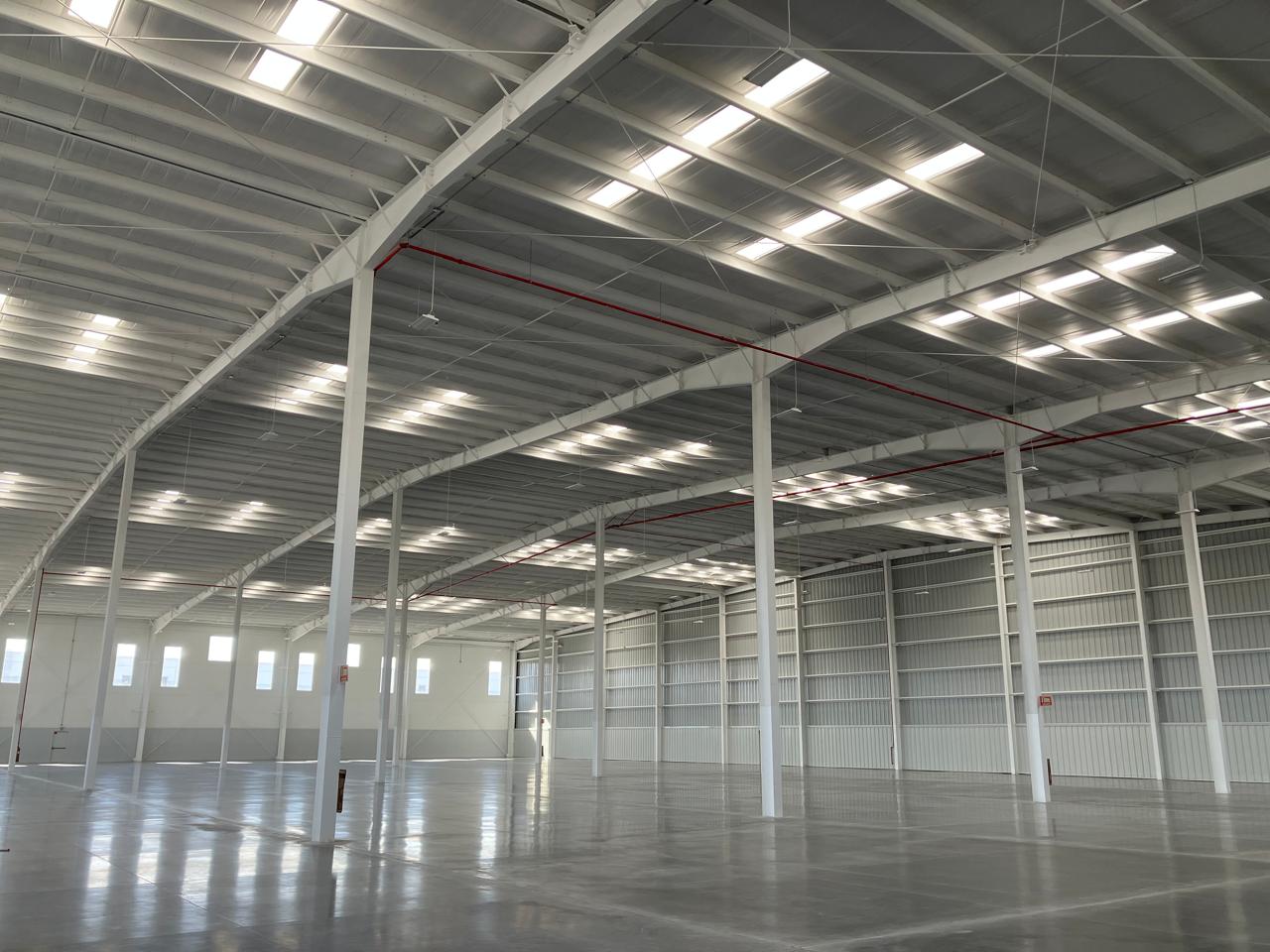
What is a logistics center and how is it different from a warehouse?
A warehouse primarily functions as an inventory storage facility, while a logistics center operates as a dynamic hub where orders are managed, routes are optimized, and delivery times are reduced. This distinction has a direct impact on a company’s competitiveness and operational efficiency.
Key functions: Storage, consolidation, distribution, and reverse logistics
The most efficient logistics centers enable companies to manage returns, classify merchandise, control inventory, and coordinate shipments in real time, ensuring agile and profitable operations. These facilities are designed to streamline supply chain performance while improving visibility and operational control across multiple distribution channels.
Key factors for choosing a location in Mexico
Road, rail, air, and maritime connectivity: An efficient logistics center must be connected to the country’s main highways, have rail access, and be located near airports and ports to ensure smooth national and international distribution. Mexico’s strategic geographic position has strengthened its role as one of the most important logistics platforms in North America, especially as nearshoring continues to accelerate industrial expansion.
Proximity to consumption or production centers: Being close to high-density consumer markets or industrial clusters reduces transportation costs and delivery times, helping companies maintain reliable and efficient operations. Strategic proximity also improves inventory management and enables faster response to market demand.
Logistics cost analysis and transit times: Every minute in transit directly affects profitability. Choosing the right location can significantly improve operational performance, reduce logistics costs, and create a competitive advantage. Companies that optimize distribution networks often achieve better service levels and improved customer satisfaction.
Infrastructure required in a modern logistics center
Clear Height, Racking Systems, Fire Protection, and Reinforced Floors: Modern logistics operations require flexible infrastructure capable of adapting to evolving supply chain demands. Facilities with clear heights above 9 meters, high-resistance floors, and ESFR sprinkler systems allow companies to maximize vertical storage capacity while ensuring operational safety and efficiency.
Loading Docks, Truck Courts, and Fleet Space: Efficient logistics operations depend on well-designed maneuvering areas that facilitate the movement of trailers and cargo vehicles. Wide truck courts, multiple loading docks, and optimized traffic flow contribute to faster loading and unloading processes while reducing operational bottlenecks.
Technology, 24/7 Security, and Perimeter Surveillance: Technology plays a critical role in modern logistics. Warehouse Management Systems (WMS), ERP integrations, automated inventory tracking, video surveillance, and controlled access systems help ensure operational continuity and inventory protection. These features are increasingly important for companies operating within ecommerce, retail, manufacturing, and third-party logistics sectors.
Which regions in Mexico lead in logistics infrastructure?
Mexico’s logistics competitiveness is concentrated in strategic industrial corridors that combine geographic advantages, multimodal connectivity, and significant infrastructure investment. Identifying these regions is essential for companies seeking to establish efficient logistics operations.
Monterrey and Northeastern Mexico: Monterrey and its metropolitan area, together with industrial municipalities in Coahuila and Tamaulipas, have become the country’s most important logistics hub for trade with the United States. Their proximity to the border, highway connections to Texas, and world-class industrial parks make the region highly attractive for nearshoring operations.
Additionally, Monterrey benefits from the Monterrey International Airport and access to ports such as Altamira and Tampico, strengthening international trade connectivity and enabling efficient multimodal transportation.
Querétaro, Guanajuato, and San Luis Potosí: Mexico’s Bajío region is widely recognized as the manufacturing heart of the country, hosting automotive, aerospace, and advanced manufacturing clusters. Cities such as Irapuato, Celaya, and Querétaro offer strategic highway infrastructure connecting central and northern Mexico, as well as key rail access points.
The Querétaro Intercontinental Airport (AIQ) has also become an important logistics driver due to its international cargo operations, supporting companies that require efficient air freight solutions.
Other emerging logistics hubs: Tijuana, Baja California, has become a strategic location for companies seeking immediate access to the California market in the United States. Its export-oriented industrial ecosystem, combined with the Port of Ensenada and Tijuana International Airport, strengthens its role as a logistics hub for sectors such as electronics, medical devices, and technology.
At the same time, states such as Jalisco and Yucatán are attracting increasing logistics investment. Guadalajara has emerged as a major hub for technology and ecommerce companies, while Yucatán and southeastern Mexico are gaining momentum through federal infrastructure projects such as the Interoceanic Corridor of the Isthmus of Tehuantepec, designed to connect the Atlantic and Pacific oceans.
Together, these regions provide the infrastructure needed for Mexico to continue consolidating its position as a key country for global supply chain relocation and modern logistics operations.
How does VYNMSA address current logistics needs?
Industrial parks with connectivity and modular spaces
With presence in strategic regions such as the Bajío and Northeastern Mexico, VYNMSA offers modern, adaptable, and ready-to-operate industrial infrastructure designed to support complex logistics requirements. Companies in sectors such as automotive, ecommerce, and third-party logistics (3PL) have optimized costs and delivery times through facilities that combine immediate availability with strategic connectivity.
VYNMSA’s industrial parks are designed to support operational efficiency, scalability, and long-term growth, helping companies respond quickly to evolving market demands.
Key recommendations before choosing your logistics center
Technical evaluation of real operational needs: Before selecting a logistics location, it is essential to evaluate operational volumes, workflow requirements, and growth projections. A detailed analysis allows companies to identify the infrastructure and connectivity necessary to support long-term operational goals.
Route and operating cost simulations: Conducting route and cost simulations helps companies anticipate logistics savings and improve distribution efficiency. This type of planning also supports better decision-making regarding transportation strategies and inventory positioning.
Legal, permit, and insurance considerations: Legal certainty, industrial permits, environmental compliance, and insurance coverage are critical for minimizing operational risks. Choosing a logistics center within a professionally managed industrial park can simplify compliance processes and improve operational reliability.
At VYNMSA, we design, build, and deliver ready-to-operate industrial spaces and Build-to-Suit developments located within Mexico’s most dynamic logistics corridors: the Bajío and Northeastern regions. Our industrial parks offer multimodal connectivity, 24/7 security, immediate availability, and scalability, ensuring that your operation not only launches without delays, but is also prepared to grow alongside market demand.
With more than 500 industrial projects delivered and over three decades of experience, we have supported national and international companies in sectors such as automotive, ecommerce, retail, and logistics, helping them operate more competitively through spaces designed to maximize efficiency.
If your company is looking for a logistics center that combines strategic location, world-class infrastructure, and certainty throughout every stage of the project, VYNMSA has the solution. Contact us and discover how we can become your trusted industrial partner in Mexico.