 ESG
ESG  Broker Friendly
  ES
ES EN
EN
Structural Engineering in Industrial Parks: What You Need to Know
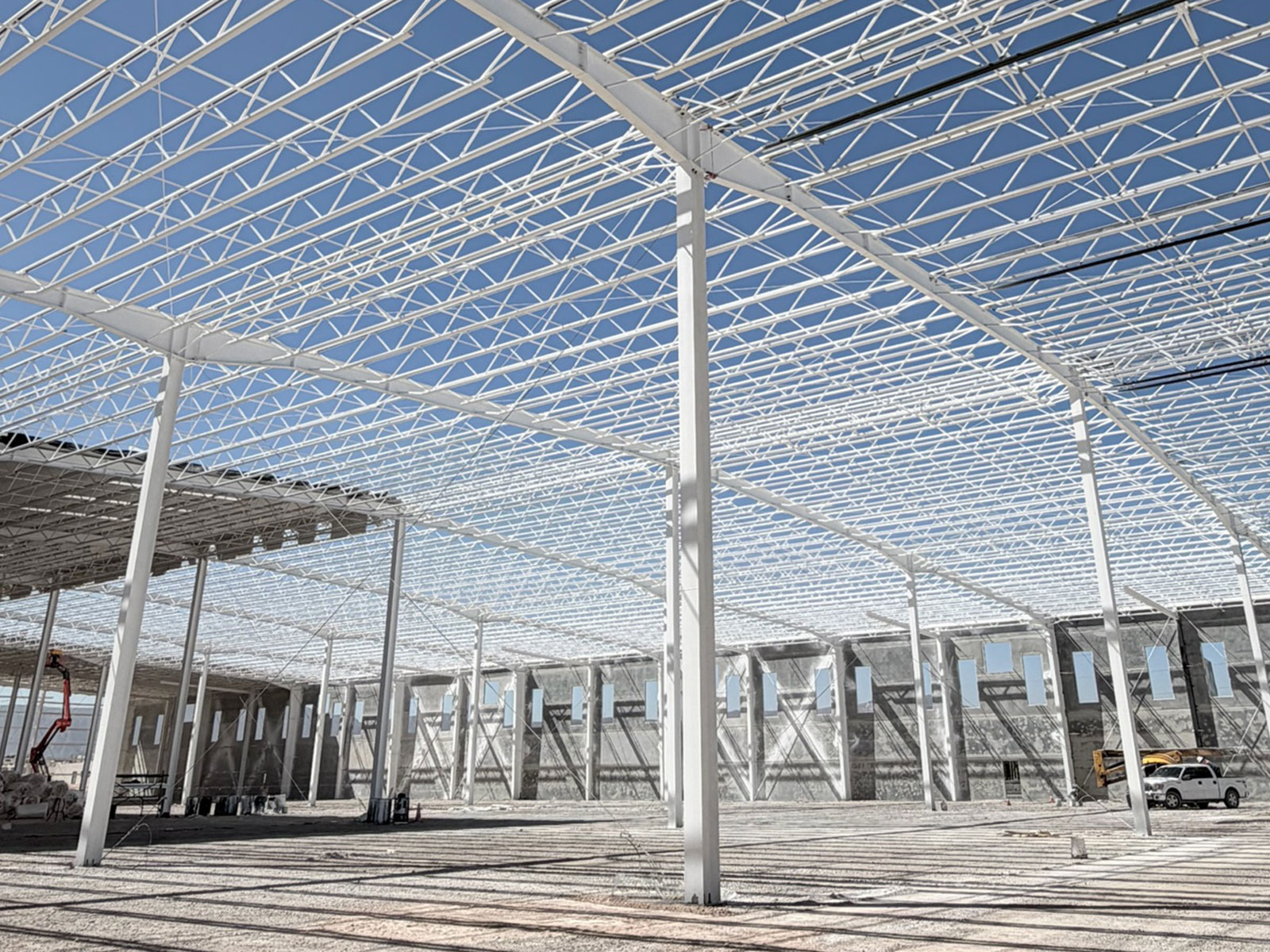
What is structural engineering in industrial parks?
Structural engineering in the context of industrial parks involves the analysis, design, and supervision of a building’s structural elements — such as columns, beams, slabs, foundations, and connections — as well as the systems that support dynamic or specialized loads (cranes, production lines, high-bay storage, among others). These elements must account for vertical and horizontal loads (wind, seismic activity), operating loads (machinery, storage), and other factors such as crane service, internal traffic, and future expansion, among many others.
Another important dimension involves paying attention to materials and structural processing (steel, concrete, precast, for example), local seismic design codes, and structural monitoring or maintenance systems. Within an industrial park, these structural elements must be integrated with civil infrastructure, logistics flow planning, loading docks, and maneuvering yards, as well as with expandability and flexibility criteria. As one industrial design guide warns, it is essential to avoid disconnected design between production flow, infrastructure services, and structural requirements.
Critical factors in structural engineering for industrial parks
Specialized operating and dynamic loads
In a typical industrial park, the structure must support more than dead load (walls, slabs) and live load (equipment, operators). It must account for specific loads: overhead bridge cranes, high-bay storage, automation systems, heavy truck traffic, logistics impacts, vibration, and more. Cranes, in particular, generate moments and lateral loads that must be carefully engineered.
Seismic resistance and local codes
Mexico is a country with seismic risk, so structural codes consider design spectra specific to each site, soil type, building height, and more.
Design for expansion, flexibility, and future modifications
A growing requirement among companies is the ability to scale or modify their industrial buildings without interrupting operations. This means designing structures with expansion in mind: structural modules, connections that allow vertical or horizontal extension, zones to accommodate future machinery, and more.
Integration with civil infrastructure, logistics, and services
The building’s structure must be coordinated with logistics elements: maneuvering yards, vehicle access, loading docks, and the flow of materials and people. It must also be coordinated with electrical, gas, water, drainage, and telecommunications infrastructure. A lack of integration can cause delays, higher construction costs, or operational risks.
Sustainability, efficiency, and structural monitoring
Contemporary structural engineering already incorporates sustainability criteria: the use of recyclable materials, prefabrication, structural monitoring, and extended service life. A study on BIM-based (Building Information Modeling) prefabricated steel structures concluded that integrating BIM with structural safety can significantly improve design reliability.
Benefits of well-executed structural engineering for industrial parks
Operational safety and risk reduction
A solid structural design reduces the risk of failures, operational interruptions, and accidents. In an industrial park, where production runs 24/7, any structural failure can cost thousands of dollars per lost hour, along with litigation, reputational damage, and more.
Optimization of operating and maintenance costs
Designing with structural efficiency in mind using site-specific spectra, optimized materials, and comprehensive modeling can reduce construction and maintenance costs over the long term.
Operational flexibility, scalability, and adaptation
The right structure allows a company to scale without having to halt operations or reinvent the building. This means a higher return on investment (ROI), less disruption, and greater agility.
Asset value and appeal to tenants and investors
An industrial park with certified, robust, and flexible structural infrastructure becomes more attractive to tenants, OEMs, Tier 1/2 suppliers, and logistics operations. This increases the asset’s value and occupancy speed.
Regulatory compliance and brand image
When a park is designed in accordance with national and international standards, the risk of non-compliance, penalties, or insurance problems is reduced. Likewise, a structurally well-conceived park contributes to an image of quality, professionalism, and reliability.
Structural engineering as the foundation of industrial growth
In Mexico, industrial park development must consider several relevant structural factors: seismic soil, local regulations (CFE, seismic, wind), varied geotechnical conditions, access logistics, utility infrastructure, and regional growth. In addition, in emerging industrial parks (in the Bajío, the Northeast, and Coahuila), demand for flexibility and expansion is high due to nearshoring, advanced manufacturing, and global logistics.
This means structural engineering must be ready for rapid change, technology, automation, vertical storage, and internal transport systems. In this way, developers and industrial players in Mexico have an opportunity to build industrial parks with advanced infrastructure that gives them a competitive edge in a globalized environment.
Structural engineering as the foundation of industrial growth
Structural engineering in industrial parks is more than calculations and beams: it is the foundation on which competitiveness, resilience, expansion, and efficiency are built. In a globalized environment, with supply chains that demand agility, flexibility, and quality, having a structurally well-designed industrial park is a strategic advantage.
For Mexico, the timing is right: the conditions are in place for next-generation industrial parks to integrate cutting-edge structural engineering with high-level logistics services and skilled talent. The details make the difference: crane loads, internal flow, seismic resistance, future expansion, adjacent infrastructure, and regulatory compliance.
If your company is looking to establish or expand operations in an industrial park, make sure structural engineering is among your fundamental selection criteria. The difference between an adequate building and an optimized one can represent years of competitive advantage, reduced operating costs, and a better return on investment. In the future of Mexican industry, structural engineering is not a cost: it is a strategic investment that strengthens your operation, protects your assets, and prepares your business for sustained growth.
VYNMSA and structural infrastructure ready for the industry of tomorrow
At VYNMSA, we incorporate these advanced structural engineering parameters into our industrial developments. Our experience developing industrial parks in key regions such as the Bajío, the Northeast, Coahuila, and San Luis Potosí allows us to integrate flexibility, expansion, robust services, and regulatory compliance from the initial design stage. For example:
- Buildings designed for cranes, high-volume storage, and intensive logistics.
- Ready infrastructure services: high-voltage power, natural gas, fiber optics, spacious maneuvering yards, and level loading docks.
- Locations with assessed structural soil, geotechnical preparation, and seismic design compliant with Mexican regulations.
- Build-to-suit options that allow clients to tailor structural requirements, internal flow, clear height, and future expansion.
These factors allow any company to begin operations in a well-designed park and focus on its operation, production, and growth, without wasting time or resources on structural obstacles or unexpected adaptations.