 ESG
ESG  Broker Friendly
  ES
ES EN
EN
Interview with the Founder and President of Market Analysis
Mexico’s industrial real estate sector continues to evolve at a rapid pace. Between the consolidation of nearshoring, the growth of emerging industrial hubs, and increasing demand focused on sustainability and technology, 2026 is shaping up to be a defining year for understanding where the market is headed.
We spoke with Marcos Álvarez, the Founder and President of Market Analysis, a firm specializing in industrial real estate data and market intelligence in Mexico, to gain insights into the current landscape, upcoming challenges, and the trends expected to shape the industry in the years ahead.
Early 2026: More Availability and a More Sophisticated Demand
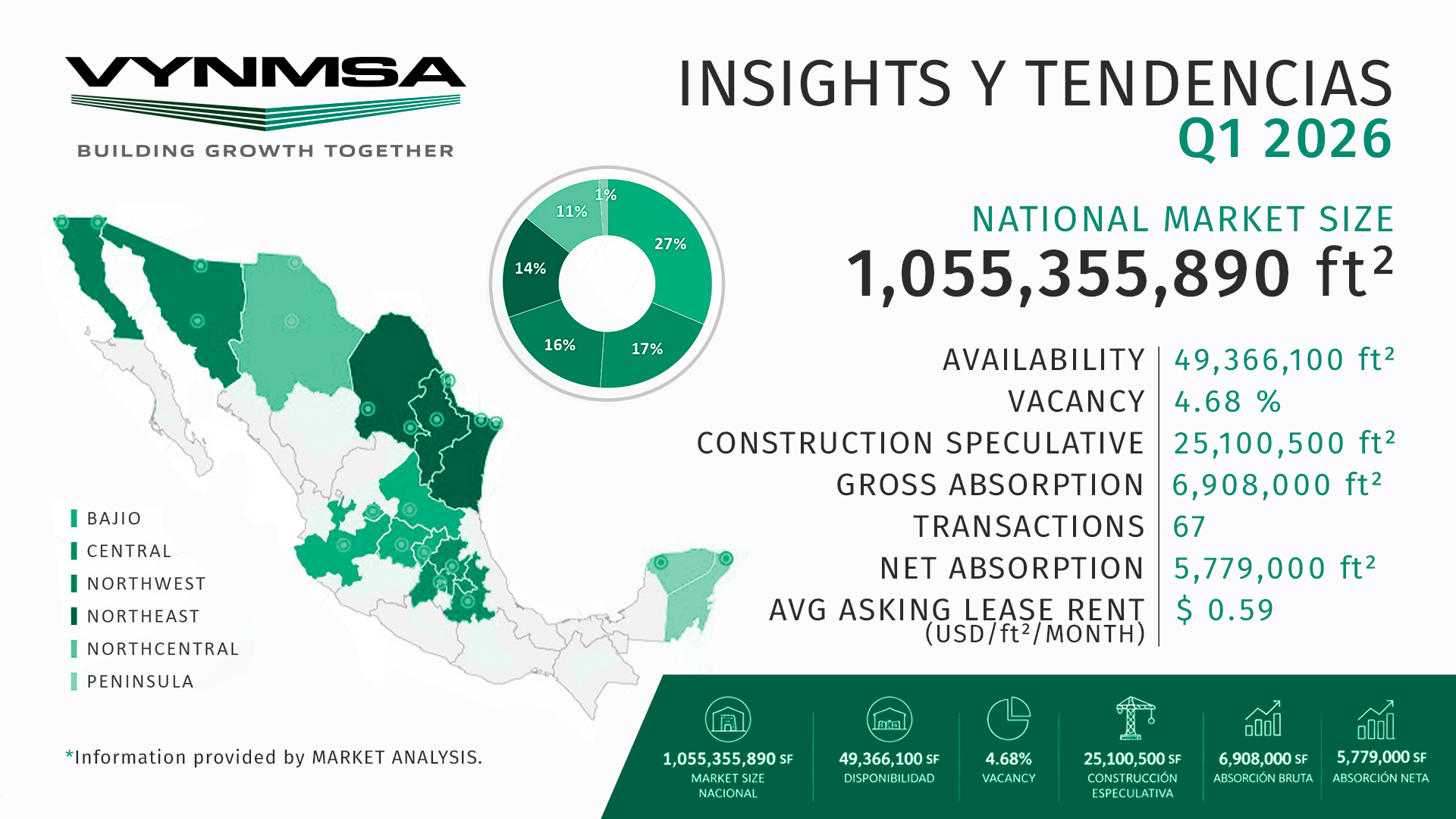
According to Market Analysis, the first quarter of 2026 showed growth in both gross absorption and industrial space availability nationwide.
However, tenant demand has evolved significantly.
“Demand is increasingly focused on industrial buildings with environmental certifications and technological features tailored to industry needs.”
The firm also noted that after the industrial boom experienced in 2022, the market has shown a gradual slowdown year after year — a trend that may continue throughout 2026.
Is Mexico’s Industrial Market Overvalued?
While some industrial markets have reached record pricing levels, perceptions vary across regions.
Monterrey, in particular, still appears to have room for growth.
“I believe Monterrey is undervalued. Despite historically being Mexico’s leading industrial market, it has not experienced the same significant price increases seen in markets such as Tijuana and Mexico City.”
What Could Happen Over the Next 12 Months
Expectations for the remainder of the year point toward mixed market behavior.
According to the interview, the second quarter could experience slower industrial demand across Mexico’s primary markets. Economic conditions and international events may temporarily impact market activity.
In addition, the USMCA review is expected to become a major factor influencing the industrial sector in both the short and medium term.
“The outcome of the USMCA review will largely determine the market trend over the next year.”
The Most Surprising Data Point of 2026
One of the most notable findings has been Mexico City’s continued leadership in industrial demand.
This comes despite Monterrey having a significantly larger inventory and Mexico City maintaining the highest industrial lease rates in the country.
“Mexico City continues to lead industrial space demand nationwide.”
Monterrey Continues Growing Beyond Expectations
Despite increasing competition among industrial markets, Monterrey continues to strengthen its position as one of Mexico’s primary industrial drivers.
In the past year alone, the market delivered more than 6.4 million square feet of industrial space, making it the fastest-growing industrial market in the country.
“No other market recorded even 50% of that volume.”
Industrial Availability Is Increasing
One of the industry’s most relevant topics today is industrial space availability.
According to Market Analysis, the increase is not just a perception — national vacancy rates have risen significantly.
“During the first quarter of this year, we recorded a 51% increase in national availability compared to the same period last year.”
Markets such as Monterrey, Mexico City, and Tijuana have all reported significant increases in availability in recent months.
How Industrial Absorption Has Changed Since the 2022 Boom
Industrial absorption has become increasingly selective and strategic.
Today, demand is concentrated primarily in markets with:
- stronger logistics connectivity
- proximity to major transportation routes
- access to large urban centers
- consolidated supply chains
In addition, industries such as automotive and aerospace continue to strengthen regions like Bajío and Northern Mexico.
Nearshoring Remains a Strong Opportunity
Despite infrastructure and international trade challenges, nearshoring remains a significant opportunity for Mexico.
The combination of strategic location, international trade agreements, and manufacturing growth continues to attract foreign investment.
“Mexico continues attracting key investments in manufacturing and logistics sectors.”
Industries such as:
- advanced technology
- Fintech
- clean energy
- specialized manufacturing
are expected to become major growth drivers in the coming years.
The Trend That Will Define the Future of the Industry
Over the next three years, one trend stands above all others: the evolution toward smart and sustainable industrial parks.
Environmental certifications and decarbonization strategies are no longer optional for multinational companies.
“Sustainability has become a requirement.”
In addition, strong growth is expected in data center development, particularly in the Bajío region, with Querétaro emerging as a key market.
What Companies Should Do Before Expanding into Mexico
The main recommendation is clear: strategically evaluate each market before making expansion decisions.
Factors such as:
- infrastructure
- incentives
- connectivity
- workforce availability
- operational resources
are critical when selecting the right location for each operation.
The Key to Winning in the Industrial Market
The interview concluded with a strong reflection on the future of the industry:
“Innovation and the ability to adapt to change.”
In an increasingly competitive, technology-driven, and sustainability-focused industrial environment, companies that understand where the market is moving will be positioned to stay ahead.
The decisions companies make today regarding location, infrastructure, and sustainability will play a critical role in competing in Mexico’s industrial landscape in the years ahead.